
Foundations of Rotary
Foundations of Rotary
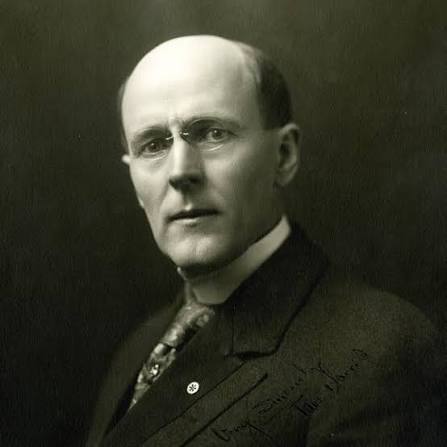
Paul Percy Harris was born on April 19, 1868 in Racine, Wisconsin, but spent much of his time in Wallingford, Vermont, the home of his grandparents, who became his principal mentors and encouraged him to study law.
He gained entry to the University of Iowa in 1889, stopping over in Chicago, then a bustling frontier town, which made a deep impression on him. After graduation, Paul set off to see the world, crossing the Atlantic to England and visiting the World’s Fair in Chicago, New Orleans, and many “amazing” places. It was a testing time during which he learnt what it was to be hungry, cold and alone, but which provided him with a wealth of contacts who were to be valuable later, as he sought to extend Rotary.
After a few years in Jacksonville, Florida, Paul was again lured to Chicago, where he gained his licence to practice law in Illinois. His business developed a steady stream of clients, but he made no true personal friends, which led to him proposing a club where businessmen could share friendship with one another, at the same time using this trusted circle of friends to exchange trade. On February 23, 1905 the idea came to fruition, when Paul and three other local businessmen met for the first time. Rotary was born, the name being derived from their decision to rotate their meeting between each other’s offices. Over the next two decades it spread across the world, reaching Australia in 1921, with formation of the rotary Clubs on Melbourne and Sydney.
What is Rotary?
Rotary International is the world’s first service club organisation. Formed in 1905 and made up of over 32,000 clubs across the world. Its members form a global network of business and professional leaders, who volunteer their time and talents to serve their communities and the world.
Rotary’s motto, Service Above Self, exemplifies the humanitarian spirit of its 1.2 million members. Strong fellowship and meaningful community and international service projects characterise Rotary worldwide. A fundamental principle of Rotary is that the Rotary club is paramount. Each Rotary club has complete autonomy, provided it works within a standard club constitution, and, although there is a district and international structure, these serve to mainly assist and guide clubs to be more effective.
Membership of Rotary clubs is open to people of every ethnic group, political persuasion, sexual orientation, language and religious belief. Rotarians are community leaders in business, industry, the professions, the arts, government, sports, the military, religion and other community organisations, They share a common purpose – to provide humanitarian service, encourage high ethical standards and help build goodwill and peace in the world.
Adapted from an article in the Rotary Downunder Magazine, Issue 6, February/March 2011